
No products in the cart.
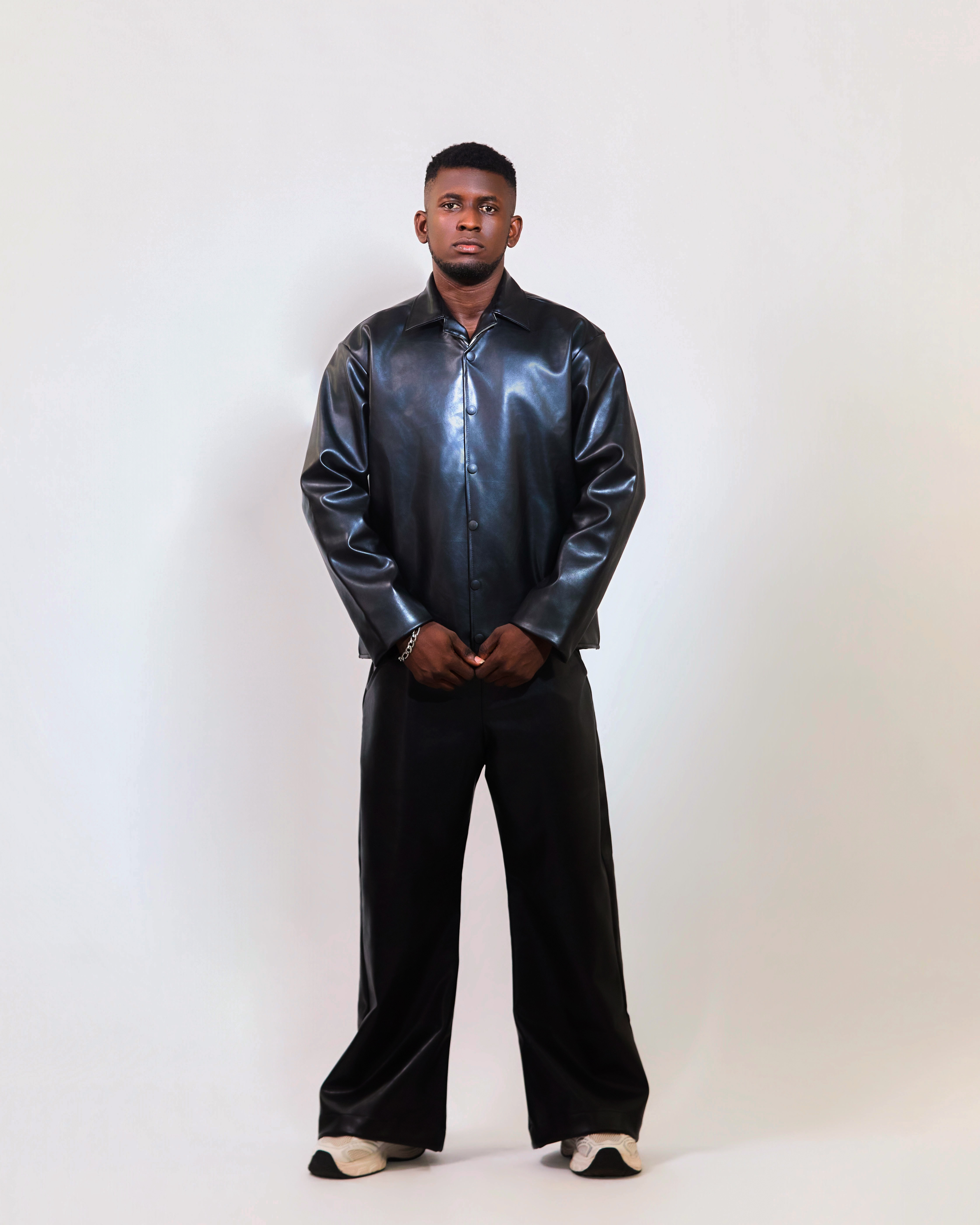
Lagos Heat, London Cold: One Wardrobe for Two Climates
If your life runs between Lagos and London, you’ve almost certainly solved it the obvious way: two wardrobes. One for the heat, one for the cold, each sitting idle while you’re in the other city.
It works, technically. It’s also expensive, it doubles your storage problem, and it means half of what you own is always in the wrong country. There’s a better way to think about it.
The two-wardrobe trap
Splitting by city feels logical, but it’s the wrong axis. Lagos and London don’t actually demand two different wardrobes — they demand two different outer layers. Underneath that, the requirements overlap far more than people assume.
Lagos is hot and humid, which rules out heavy synthetics that trap heat and cling. London is cold and damp for much of the year, which rules out anything that soaks through and stays wet. Both cities punish poor fabric. Neither cares much about the difference between a shirt you’d wear in one and a shirt you’d wear in the other.
Once you stop packing by destination and start packing by layer, the wardrobe halves.
The outer layer does all the work
This is where your money should go. A well-cut jacket in a fabric that breathes is the single piece that decides whether an outfit works in either climate. In Lagos it’s the evening layer for over-air-conditioned rooms and cooler nights. In London it’s the thing standing between you and the weather.
The jacket that fails at this is the one built for exactly one temperature — heavily insulated, or so light it offers nothing. The jacket that succeeds is structured enough to hold its shape, breathable enough to wear at 30°C, and substantial enough to layer under at 8°C.
Judge fabric by weight, not by name
“Cotton” and “wool” tell you almost nothing. A heavy cotton canvas and a light cotton poplin behave like different materials entirely. What actually determines whether a piece transitions is weight and weave.
- Mid-weight beats heavy. Heavy fabrics are single-climate by definition. Mid-weight pieces layer up for cold and stand alone in heat.
- Structure beats bulk. A jacket that holds its shape through a tailored cut works in both cities. One that gets its shape from padding only works in one.
- Natural fibres handle humidity better. They move moisture instead of trapping it against you, which matters enormously in Lagos and barely at all in London — so it’s a free win.
Colour discipline is what makes it feel deliberate
A two-climate wardrobe only works if the pieces combine, and pieces only combine reliably if the palette is disciplined. Black, cream, grey and one or two accents will carry you through both cities and stop you needing city-specific shoes, bags and layers to make anything work.
This is the least glamorous advice in the piece and the one that does the most. Every additional colour multiplies the number of things that have to coordinate with it.
What genuinely transitions — and what never will
Being honest about the second list saves you money.
Transitions well: mid-weight outerwear, structured shirts, trousers in natural fibres, anything designed to be layered rather than to be warm on its own.
Never transitions: heavy winter coats, thermal layers, lined boots. These are London-only and that’s fine — just accept them as a small dedicated set rather than pretending they’re part of the main wardrobe.
The goal isn’t a wardrobe where every single item works in both cities. It’s a wardrobe where the core works in both and the exceptions are few enough to count.
The packing test
Here’s how to know if you’ve got it right. Pack for a two-week trip that ends in the other city. If you can do it from one carry-on without a separate bag of “cold clothes”, your wardrobe is working. If you can’t, look at what forced the second bag — that’s the piece to replace next.
EQUINOX was built for exactly this. Mid-weight leather and tweed print, cut to layer, in male, female and unisex sizing. Shop the collection — free UK shipping, 30-day returns, and we ship to Nigeria.